The best stargazing near Ilfracombe is out on the dark headlands and moor just east of town, where the streetlights fall away and the sky opens right up. The closest officially dark spot is Holdstone Down above Combe Martin, a short drive onto Exmoor, which back in 2011 became the first International Dark Sky Reserve in Europe. Nearer still, Morte Point and the big empty beaches go properly dark on a clear, moonless night. You don't need a telescope or any great know-how either, just a clear sky, warm clothes and a bit of patience while your eyes adjust.
How dark is it here?
Let's be honest from the off. Ilfracombe is a working town, so it has streetlights, harbour lights and the glow of houses, and you won't see the Milky Way from the middle of it. The good news is you don't have to go far at all. Walk or drive ten or fifteen minutes out onto the headlands or up onto the moor and the light pollution drops away fast, because the coast faces out over empty sea and the hills behind town rise into some of the darkest countryside in the south of England.
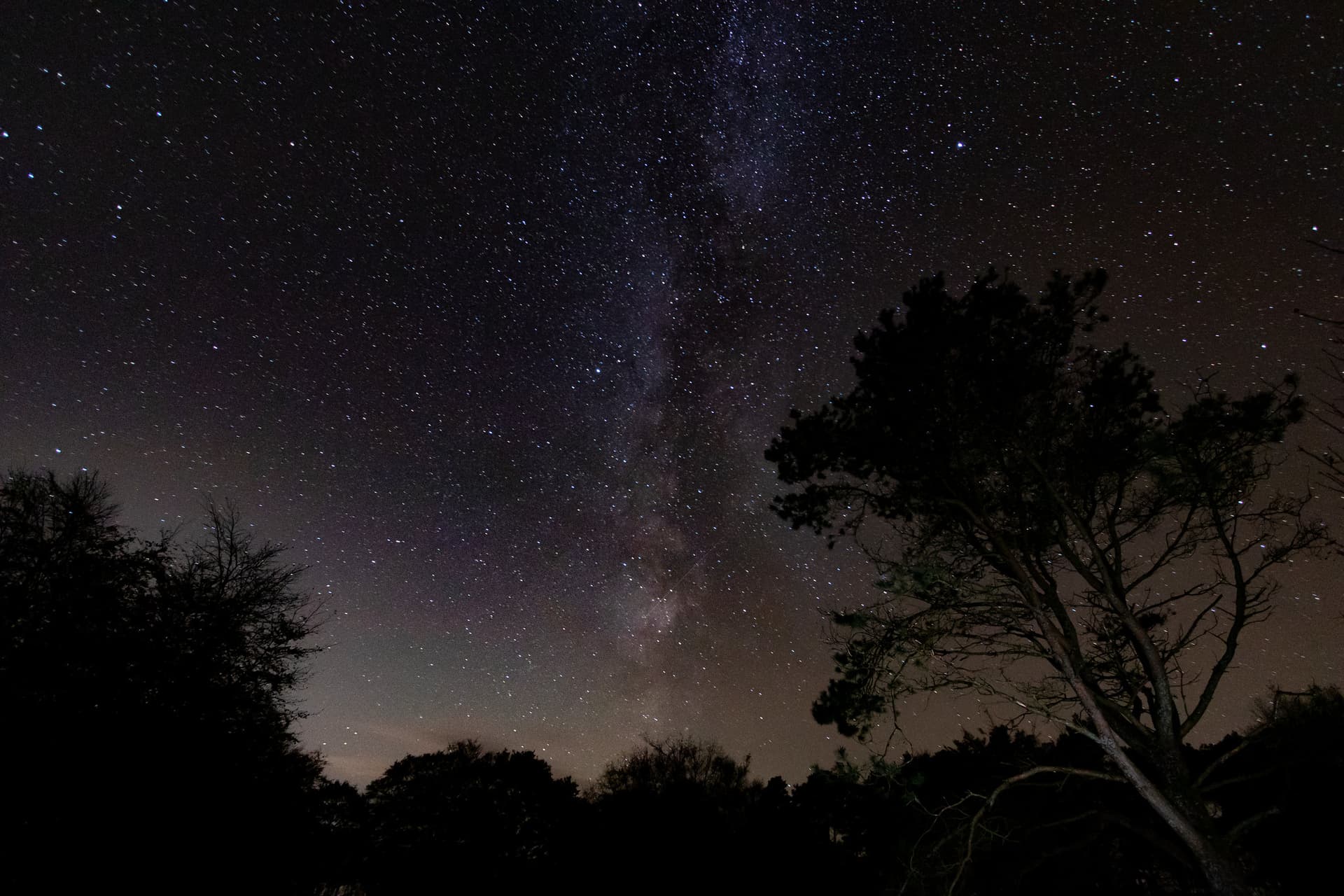
That's down to Exmoor, which sits right on the doorstep. Exmoor National Park was granted International Dark Sky Reserve status in 2011, the first place in Europe to earn it, and it's still one of the darkest skies you can reach easily from here. On a clear, moonless night in the right spot you can see thousands of stars, the soft band of the Milky Way, the odd satellite tracking over and, with a bit of luck, a shooting star or two. The trick is getting away from the town glow and giving your eyes a good twenty minutes to adapt.
The best spots near EX34
Holdstone Down
Holdstone Down is the closest officially recognised Dark Sky Discovery Site to Ilfracombe, up on the open moor between Combe Martin and the Hunter's Inn. It's roughly half an hour's drive from town, out through Combe Martin and up the hill before you turn off onto the moor road. There's a car park up top, and from there you're straight out onto wild, high ground with huge horizons and barely a light in sight. Expect it to be properly dark and properly exposed, so take a torch for the walk from the car, keep well back from the coast path edge in the black, and wrap up because it's always colder up there than in town.
Morte Point
Out past Mortehoe, Morte Point is a rocky finger of National Trust land that points west into the open sea, which puts the worst of the town's glow behind you. It's about twenty minutes from Ilfracombe to the car park in Mortehoe village, then a walk out onto the headland. The reward on a clear night is a dark sea with the stars coming right down to the horizon. Going out along the point in full darkness is only for the sure-footed with a good torch, as the path runs close to the cliffs, so plenty of people simply stargaze from nearer the car park instead.
Bull Point
A little further round the coast, Bull Point is an even more remote headland reached on foot from Mortehoe along the coast path. The setting is wonderfully dark and wild, though the working lighthouse does flash through the night, so it's not pitch black right by the light itself. Walk a short way back along the path and you can put the beam behind you. This is one for the confident walker on a settled night with good boots and a head torch, not somewhere to be stumbling about in the dark, so give yourself plenty of daylight to get into position.
Woolacombe and the big beaches
Woolacombe gives you three miles of sand, and at low tide on a dark night it becomes a vast, open space well away from the village lights, with the sky reflected in the wet sand. The safest way to take it in is from Marine Drive, the National Trust road climbing north above the bay, where you can pull up and look out over the whole sweep. If you do walk down onto the sand, check the tide times first, because the beach fills in fast and an incoming tide in the dark is no joke. It's about twenty minutes from Ilfracombe.
Deeper into Exmoor
For the very darkest skies, point the car further into the reserve. County Gate, high on the A39 above Lynmouth, has its own car park and sits in lovely dark countryside about forty-odd minutes from Ilfracombe. Carry on another twenty minutes or so and you reach Brendon Two Gates, out on the central moor, another officially designated Dark Sky Discovery Site with roadside parking. Both feel a world away from town lights, so they're worth the drive on a special clear night or during a meteor shower, though the lanes are narrow and unlit, so take it steady in the dark.
What to see through the year
Winter is the pick of it for sheer spectacle, because the nights are so long and dark that you barely have to stay up late. Look for Orion striding up over the sea, the little cluster of the Pleiades, and the bright run of winter stars. The Geminids, one of the best meteor showers of the whole year, peak on the night of 13 to 14 December in 2026, and with the moon out of the way early that year the conditions should be good, so that's the date to pencil in. The Quadrantids follow with a short, sharp peak around 3 to 4 January 2027, best looking towards the northern sky.
Spring skies are quieter to the eye but good for spotting distant galaxies with binoculars. Come summer the nights are short and never go fully dark this far north, which makes it the trickiest time, though the heart of the Milky Way sits low in the south and looks lovely over the sea on a clear night. The Perseids peak on the night of 12 to 13 August in 2027, but a bright, nearly full moon washes out the early hours that year, so the useful window is after the moon sets in the small hours. Autumn brings the long dark nights creeping back and is a fine time to start again.
There's a partial solar eclipse worth a mention too, on the morning of 2 August 2027, when the moon takes a bite out of the sun between roughly nine and eleven o'clock. It's only partial here, with something like 40 per cent of the sun covered from the south west of England rather than a full blackout, and you must never look at it without proper solar eclipse glasses that meet the ISO 12312-2 safety standard. Ordinary sunglasses will not do.
Dark Skies Festival
Every autumn Exmoor National Park runs the Exmoor Dark Skies Festival, a few weeks of guided stargazing, talks, night walks and family events spread across the reserve. In 2026 it ran from 16 October to 1 November and marked its tenth year. The 2027 dates hadn't been published when this guide was written, but it has always landed in the back half of October and into the first days of November, so keep an eye on the park's own listings nearer the time. It's a good way in if you fancy some expert help finding your way around the sky, and many of the sessions are beginner-friendly.
Practical tips
A few simple things make all the difference. Pick a night with a clear forecast and little or no moon, as a bright moon drowns out the fainter stars, and give your eyes a good twenty minutes in the dark to adjust properly. Use a red torch, or stick a bit of red film over a normal one, because white light wrecks your night vision in a second and you then have to start the twenty minutes all over again.
Wrap up far warmer than you think you need to, since standing still on a clifftop or up on the moor in the dark gets cold quickly even in summer. Take care near the cliffs, because the coast path is unlit and the edges are unforgiving in the black, so stay well back and keep children and dogs close. On the beaches, check the tide times before you set out, as being caught by an incoming tide in the dark is seriously dangerous. Tell someone where you're headed and when you'll be back, and watching from near the car is a perfectly good option on a wild night.
For a daytime version of these same headlands, our coastal views guide covers the viewpoints worth the climb, including the Great Hangman above Combe Martin, and if it's the light at the other end of the day you're after, our sunset spots guide has the best of those. The lanes around Berrynarbor and the villages inland go pleasantly dark too if you just want a quick look up without a drive. All the dates and details here were checked in late October 2026, and astronomical timings and festival dates do get refined, so confirm the latest before you plan a night around them.
Frequently asked questions
Where is the best stargazing near Ilfracombe?
Holdstone Down above Combe Martin is the nearest officially recognised dark-sky spot, about half an hour away on the edge of Exmoor. Closer to town, Morte Point and the Marine Drive above Woolacombe both get dark on a clear night. For the very darkest skies, drive deeper into Exmoor to County Gate or Brendon Two Gates.
Is Exmoor a Dark Sky Reserve?
Yes. Exmoor National Park became an International Dark Sky Reserve in 2011, the first place in Europe to be given the status. It covers a large stretch of moor and coast within easy reach of Ilfracombe, and it's still rated among the darkest and best skies for stargazing anywhere in southern England.
When is the Exmoor Dark Skies Festival?
The festival runs each autumn, with talks, guided stargazing and night walks across the national park. In 2026 it ran from 16 October to 1 November, marking its tenth year. The 2027 dates weren't confirmed when this guide was written, but it has always fallen in the second half of October into early November.
Can you see the Milky Way from North Devon?
You can, on a clear and moonless night once you're away from the town lights. Head out to the Exmoor spots or the darker headlands and let your eyes adjust, and the soft band of the Milky Way shows up well. It sits low in the south in summer and is harder to catch from the middle of Ilfracombe itself.
When is the best time of year for stargazing in Devon?
Winter is the best all-round time, with long, dark nights, bright constellations like Orion and the superb Geminid meteor shower in mid-December. Autumn and early spring are good too. Summer is the hardest, as the nights are short and never go fully dark this far north, though the Milky Way still rewards a late look.