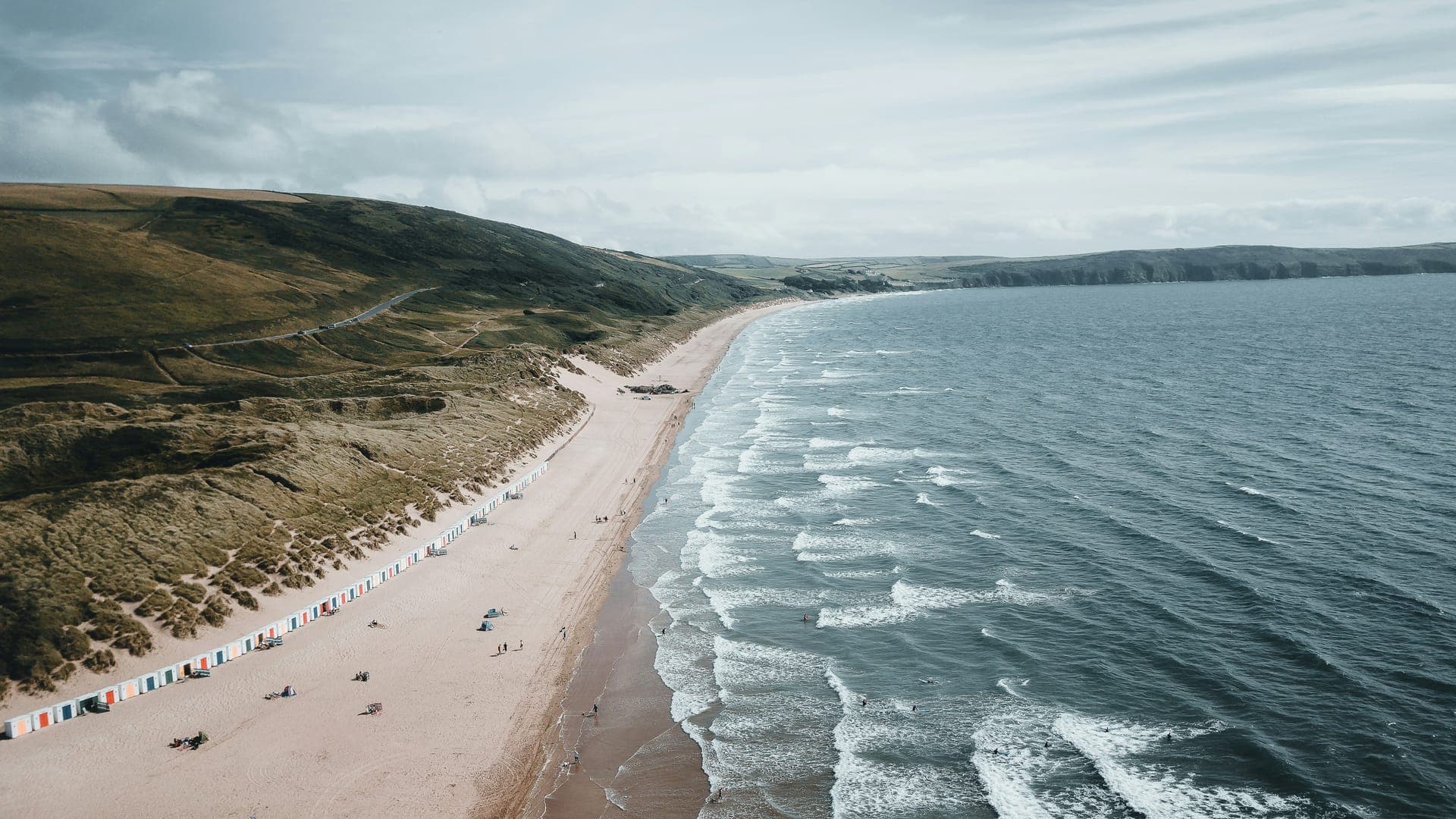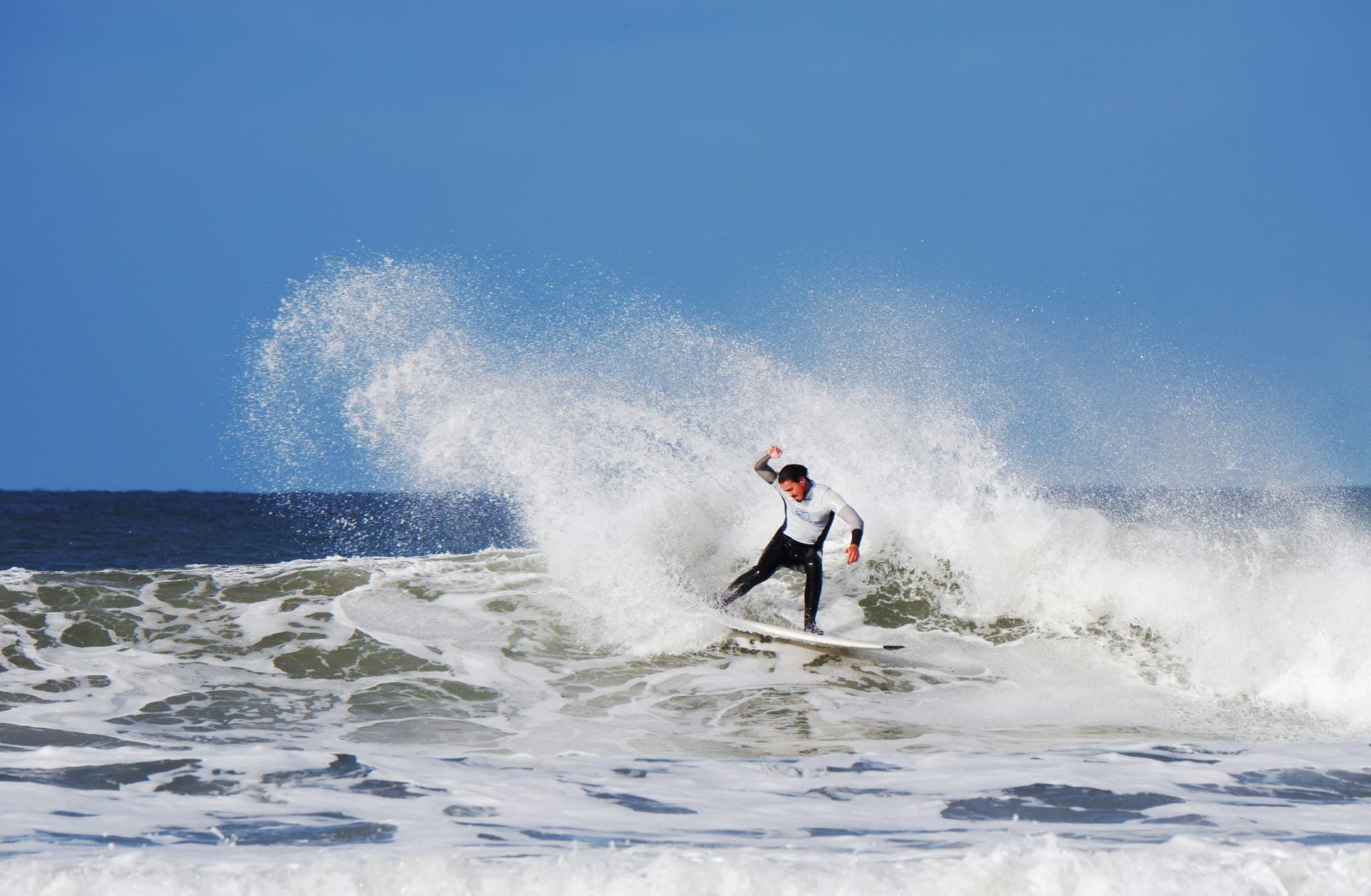
Woolacombe is one of the country's best places to learn to surf. The beach runs for around three miles along the North Devon coast, with a sandy seabed, consistent waves and enough space that even on a busy summer day you can find room to practise. Add in surf schools, board hire and lifeguard patrols through the season, and it is easy to see why so many people catch their first wave here. This guide covers what a beginner needs to know before paddling out.
Best for: Beginners and improvers Beach: Around three miles of sand, gentle beach break Faces: West, into the Atlantic Best tide: Around mid tide for learners Lifeguards: RNLI patrols through the main season Wetsuit: Needed year round
Why Woolacombe is good for beginners
The shape of the beach is the main thing. The long sandy bay lets waves break gradually rather than dumping, which makes them easier to catch and far more forgiving when you fall off. Facing straight into the Atlantic, it picks up regular swell through the year, so there are usually gentle waves to work with even when conditions are small. The sheer size helps too, since beginners can spread out and find a quieter patch away from the more experienced surfers further along.
The best time to surf
Summer is the most popular season for learners. The water is at its warmest, the waves tend to be smaller and the lifeguards are on duty, which all makes for a comfortable introduction. Early mornings often bring the cleanest conditions before the wind gets up, and evenings can be lovely once the beach quietens down.
Tide matters as well. Woolacombe has a big tidal range, so the beach changes character through the day. Around mid tide is often the kindest for beginners, while a very low tide leaves a long walk out to smaller, weaker waves. Whatever you plan, check the surf forecast before you head down, since conditions here shift daily.
Surf schools and lessons
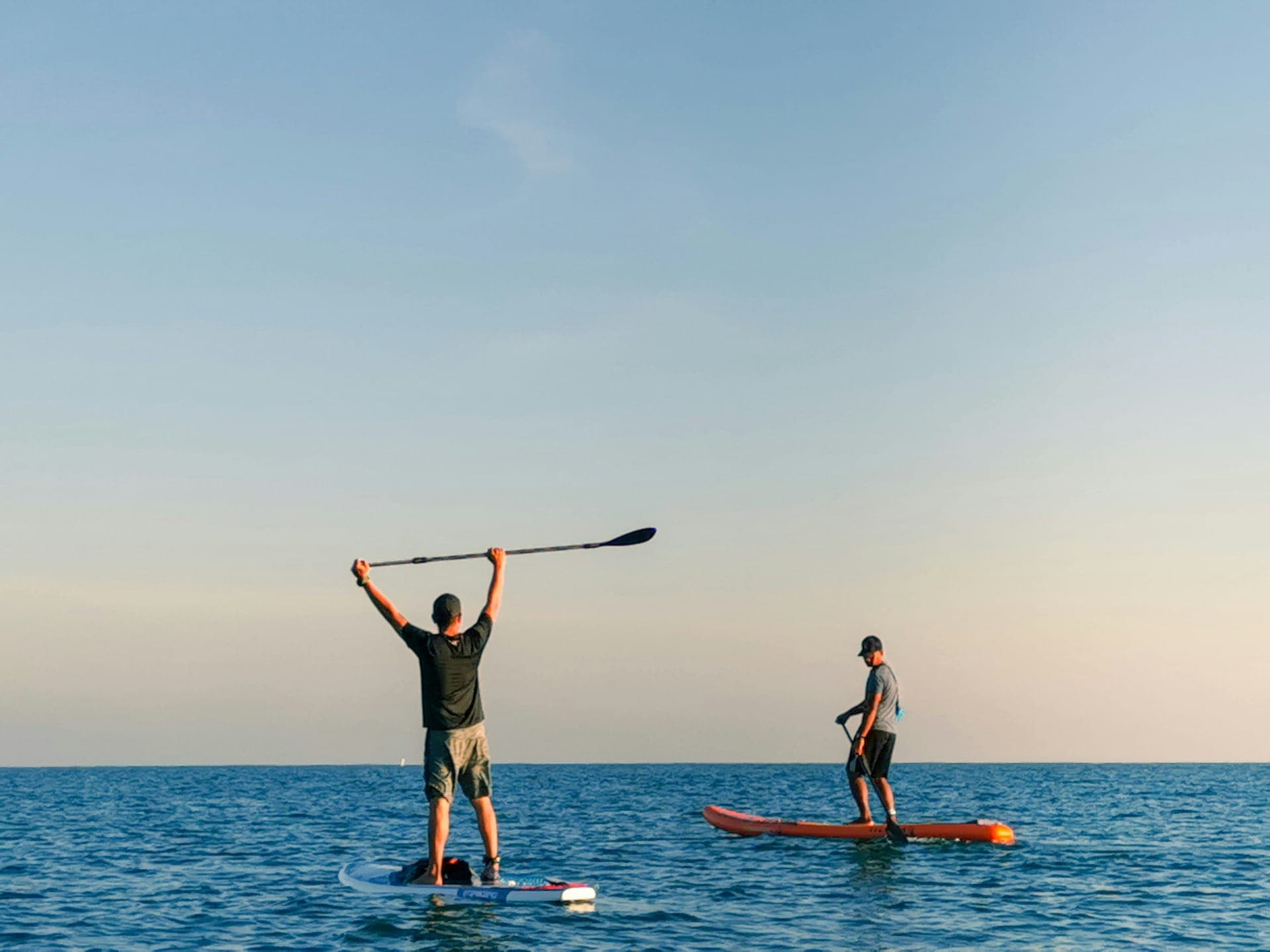
For most beginners, a lesson is the easiest way in. Woolacombe has several surf schools that provide a qualified instructor, a wetsuit and a board, and a typical group session runs a couple of hours, which is usually enough to get you standing up and catching a few waves of whitewater. Lessons cover the basics of paddling, popping up, reading the waves and staying safe in the water. Board and wetsuit hire is widely available too if you want to keep practising afterwards. For other watersports around the area, our watersports guide has more on who runs what.
Where to start on the beach
Because the beach is so long, there is usually a section that suits learning. The main stretch near the village is the most accessible and tends to be where the surf schools operate, and the lifeguards are normally based here in season. Staying within the patrolled area while you are finding your feet is the sensible move, and you can always drift slightly along the sand for a bit more space once you know what you are doing.
What you need
You do not need much for a first session. Most beginners use a foam board, or soft top, which is bigger and more stable than a hard board and much easier to paddle and stand on. A wetsuit is essential, as the water off North Devon feels cold even in summer. As a rough guide, a 3/2mm suit does the job through the warmer months, while spring and autumn call for a 4/3mm with boots, and winter needs a 5/4mm with boots, gloves and a hood. Most schools and hire shops include a suit in the price, so you rarely need your own to start.
Staying safe: flags, tides and rips
A little knowledge goes a long way here. When the RNLI are patrolling, they set out flags, and it is worth knowing them. Red and yellow flags mark the supervised area for swimming and bodyboarding, black and white chequered flags mark the zone for surfboards and other hard craft, and a red flag means do not go in the water at all. As a surfer you want the black and white area.
Rip currents can form on a beach this size, so surfing near the lifeguards is the safest bet, and if you are ever caught in one, do not fight it. Start in the whitewater close to shore and only move further out as your confidence grows, keep an eye on the changing tide, and try not to surf alone. Taking a lesson with a qualified instructor is by far the best way to pick all of this up properly.
After the surf
Half the appeal of a Woolacombe session is what comes after. The village has plenty of cafés, pubs and places to eat where you can warm up, and round at Barricane the beach café is a fine spot to thaw out with a coffee. Plenty of people follow a surf with a walk along the sand or a stretch of the coast path, and if you time it right, a Woolacombe sunset is a fine way to end the day.
Where to go next
Once you feel steadier on your feet, there are other beaches nearby worth exploring. Croyde is known for more powerful, hollow waves and draws the experienced crowd, while Putsborough at the southern end of the bay can offer quieter conditions at certain states of the tide. Together they make this corner of North Devon a top place in the country to learn and then improve.
Frequently asked questions
Is Woolacombe good for beginner surfers?
Yes, it is among the UK's best learn-to-surf beaches. The long sandy bay produces gentle, forgiving waves, there is space to spread out, and surf schools and lifeguards operate through the season.
Do I need a wetsuit to surf at Woolacombe?
You do, all year round. A 3/2mm suit is fine in summer, with a thicker 4/3mm for spring and autumn and a 5/4mm plus boots, gloves and hood in winter. Most surf schools and hire shops include a wetsuit in the price.
When is the best time to surf for beginners?
Summer is the most comfortable, with warmer water, smaller waves and lifeguards on duty. Aim for early morning or evening for cleaner conditions, and around mid tide, which is usually the kindest state for learning.
Are there lifeguards at Woolacombe?
The RNLI patrols the main beach through the busier season. Surf within the black and white chequered flags, which mark the zone set aside for surfboards, and avoid the red and yellow swimming area.
Do I need a lesson or can I just hire a board?
You can hire a board and wetsuit and head out, but a lesson is strongly recommended for a first go. An instructor teaches you the basics safely and gets you catching waves far quicker than going it alone.